

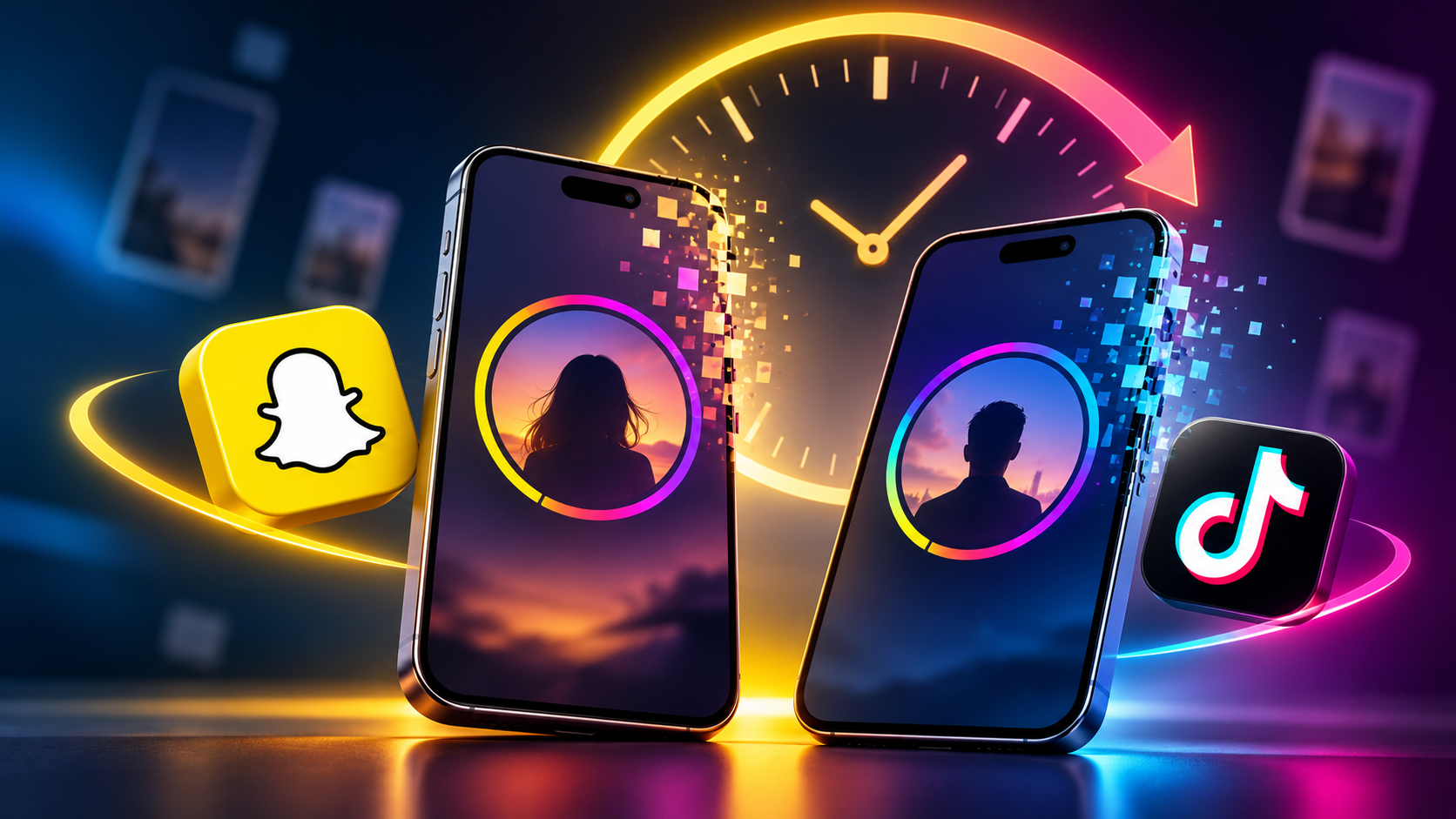
A photo that lasts ten seconds sounds like a strange thing to build a company around. Yet that is more or less how Snapchat started, and since then almost every major app has copied the idea. Instagram has Stories, Facebook has them, WhatsApp has Status, and TikTok added its own version that disappears after a day.
This article looks at why temporary content caught on, how different kinds of people use it, and what the habit says about the way we share. Along the way, it answers the practical questions: how long each story lasts, who can see it, and what you can do if you want to watch one again.
Quick Answer: How Long Stories Last and Who Can See Them
Both Snapchat and TikTok stories stay visible for 24 hours, then disappear unless the creator saves them.
| Platform | How long a story stays up | Who can watch | What the creator controls |
| Snapchat | 24 hours | Everyone, friends only, or a custom group, chosen by the creator | Save to Memories, or remove a Snap from the Story at any time |
| TikTok | 24 hours | Public accounts reach a wider audience, private accounts only approved followers | Delete early, save to Highlights, and see a viewer list, depending on settings |
Features can differ by region and app version, so the app’s own settings are the final word.
How a Ten-Second Photo Changed Online Sharing
When Snapchat first appeared, most social platforms worked like a public scrapbook. You posted something, it sat on your profile, and anyone who scrolled far enough could find it years later. That permanence made people careful. Photos got filtered, captions got rewritten, and plenty of ordinary moments never got shared at all because they didn’t seem good enough to keep forever.
Disappearing messages changed that. If a picture would be gone in a few seconds, there was less pressure to make it perfect. People sent blurry selfies, pictures of lunch, a shot of a messy desk. The point was the moment, not the record. Snapchat added Stories in 2013, Instagram brought the same format to a much larger audience in 2016, and other apps followed.
Today the format is so common that many users open stories before they look at the main feed. For a lot of people, that is where the daily, low stakes sharing happens. Fan communities work the same way: when a new anime episode drops or a K-pop group announces a comeback, the first reactions usually show up in stories, not posts.
Not every platform kept the habit, though. LinkedIn tested stories and later discontinued them. That is a useful reminder that the format suits some audiences better than others.
Why Stories Feel Easier Than Regular Posts
Part of the appeal is simple. A story asks for less. You don’t need a polished caption or a perfect photo, and you don’t have to worry about how a clip will look on your profile grid six months from now. That same short lifespan also means a story can be gone before you get a chance to watch it again. If the creator posted it publicly, a Snapchat story viewer lets you open it in a browser while it is still live, without the app.
One common explanation for the popularity of stories is lower pressure. When a post has an expiry date, the stakes feel smaller. People share more often, and they share things that feel closer to real life. Whether that makes people more honest or just more casual is still debated, and the answer probably differs from one person to the next.
There is also the matter of audience. Many people use stories for a smaller circle, such as close friends, while keeping the main profile for a wider group. That split lets someone be relaxed with friends and tidy with everyone else.
What It Means for People Who Make Content
For creators, stories have clear upsides and one big catch. They are quick to produce, they sit at the top of followers’ screens, and they let a channel or brand show a more relaxed side. A streamer can post “live in 10 minutes” with a screenshot of tonight’s game. A cosplayer can share the chaos backstage at a convention. A game studio can drop a five-second teaser before an update goes live. None of it needs to be edited into a finished piece.
The downside is that the work disappears. A creator who spends an hour on a behind the scenes series may find that nothing remains after a day, unless they save it themselves. Most platforms offer highlights, archives, or a way to store past stories, and many creators use them. Others accept the short lifespan as part of the deal and treat stories as conversation rather than a portfolio.
Measuring results also looks different. A story’s reach is tied to a single day, so creators tend to watch replies, taps, and direct messages more than likes. That has pushed some to think of stories as a way to talk with followers instead of broadcasting to them.
Watching Quietly: Why Some Viewers Prefer Not to Leave a Trace
Watching a story is not always a neutral act. On most apps, the creator can see who viewed it. For close friends, that’s fine. For a former coworker, a distant acquaintance, or a brand account you are only researching, it can feel awkward.
On TikTok, a creator can usually see a list of viewers, and public accounts reach a wider audience than private ones. Stories can also show up in other parts of the app, such as the For You and Following feeds, so a story can be seen by people who found it through browsing rather than through a follow.
This is why a TikTok story viewer comes up in conversations about privacy and research. Journalists checking a public figure’s posts, marketers studying competitors, and people who simply don’t want to announce their curiosity may look for a way to see public stories without logging in. These services generally only show content that is already public. They cannot open a private account, and any site that claims otherwise is worth doubting.
Whether quiet viewing is polite is a separate question. Some people see it as harmless, the same as glancing at a public noticeboard. Others feel that a viewer list exists so creators know who is paying attention, and bypassing it changes the social deal. Both positions are reasonable, and it often comes down to whose account it is and why you are looking.
Memory, Nostalgia and the Case for Keeping Some Things
There is something odd about a format built to disappear that still makes people want to hold on. A grandparent’s birthday video, a goofy clip from a road trip, a message that made someone laugh on a bad day. Those moments feel small when they happen and valuable later.
Many people already have habits for this. Some save their own stories to a camera roll before they post. Others keep a folder of favorites, or back up their account data once in a while. Some take the opposite view and say the whole point is to let things go. Plenty of users like knowing their old posts aren’t hanging around, and they see disappearing content as a form of privacy.
What matters more is that the person who made the content gets some say. A video of your own kid is yours to keep. A friend’s late night rant probably belongs to them.
Etiquette and Rules Worth Knowing
Platform rules and local laws shape what is acceptable, though neither covers every situation. Most apps say that users own what they create, and that others shouldn’t copy or reuse it without permission. Keeping something for private viewing is usually seen very differently from reposting it, editing it into a compilation, or using it in an advertisement.
Laws on copyright and privacy vary by country, and a few places have specific rules about recording or sharing images of other people. If you are unsure about a particular case, the sensible step is to ask the creator or check the platform’s own terms. Reading the policy takes five minutes and can prevent a lot of confusion.
Etiquette adds another layer. Even when something is public, many people expect a small courtesy: tag the person, ask before sharing, and avoid pulling a clip out of context. These habits are not legal requirements, but they tend to keep online communities friendlier.
Common Questions
How long do Snapchat stories last? A Snapchat story stays visible for 24 hours. After that it disappears from the app unless the creator saved it to Memories.
How long do TikTok stories last? TikTok stories also last 24 hours. The creator can delete one earlier, or add it to Highlights to keep it on their profile longer.
Can you see who viewed your story? On both apps the creator can generally see who watched, though what appears can depend on privacy settings and account type.
Can creators keep their own stories? Yes. Most platforms let you save stories to highlights, an archive, or your phone, so they stay available if the creator wants that.
Are private accounts really private? Yes. Content from a private account is meant for approved followers only, and outside services cannot legitimately open it.
Why the Format Is Here to Stay
Temporary content began as a small experiment and became a normal part of how people talk online. It lowers the pressure to be perfect, gives creators a casual way to connect, and gives viewers a quick glimpse into other people’s days.
It also raises fair questions about memory, privacy, and who gets to decide what is kept. Some people want to save everything, others want everything to fade, and most sit somewhere in between.
Whichever camp you are in, the 24-hour clock is worth knowing, because it decides what you can still watch, save or share tomorrow.






Membalas